Showing posts sorted by relevance for query Record of Jesus. Sort by date Show all posts

Thursday, December 22, 2011

3. The Record of Jesus' Ancestors


File:St Denis transept south.jpg

Rose window on the south end of transept arm, St. Denis Cathedral, St. Denis, France. The stained glass depicts the Tree of Jesse (ancestors of Christ from Jesse onwards) in the Art Nouveau style. From Wikimedia Commons


January 2 or December 22

BACKGROUND

3. The record of Jesus' ancestors  


Matthew 1:1-17

Matthew was a Jewish tax collector, and he wrote this gospel for a Jewish audience that awaited the Messiah who was to be the "son of David, the son of Abraham." That is why this genealogy is the first thing you read in the book of Matthew. This is very significant!

Matthew traces the legal or royal ancestry of the Messiah through Joseph, Jesus' legal (if not biological) father. Matthew's beginning point is Abraham. 

If you have been part of the Bible Book Club Old Testament readings, this genealogy will contain many familiar names. One example is Ruth, our family reads the book of Ruth for our Jesse Tree Christmas devotional (see REFLECTION and APPLICATION below), and we review that Ruth, a Gentile, was the great-grandmother of King David and King David was Jesus' grandfather times 28 greats!

It was common for generations to be left out as Matthew did when he arranged the genealogy in groups of 14 ("son of" can mean son or descendant). 


It should be noted that Jews have never questioned the lineage of Jesus.


It is also interesting to note that five women are mentioned in Matthew's genealogy: Tamar (Genesis 18:15-30), Rahab (Joshua 2:1-24, 6:21-25), Ruth (Ruth 1:1-19; 4:13-17), Bathsheba (2 Samuel 11), Mary (Luke 1:26-38). You can read backgrounds about them in a group of previous Bible Book Club posts HERE.

Genealogy of Jesus according to Matthew through Joseph's Line
  1. Abraham
  2. Isaac
  3. Jacob
  4. Judah & Tamar
  5. Pharez
  6. Hezron
  7. Ram
  1. Amminadab
  2. Nahshon
  3. Salmon & Rahab
  4. Boaz & Ruth
  5. Obed
  6. JESSE
  7. David & Wife of Uriah
  1. Solomon
  2. Rehoboam
  3. Abijam
  4. Asa
  5. Jehosaphat
  6. Jehoram
  7. Uzziah
  1. Jotham
  2. Ahaz
  3. Hezekiah
  4. Manasseh
  5. Amon
  6. Josiah
  7. Jeconiah -  CAPTIVITY
  1. Shealtiel
  2. Zerubbabel
  3. Abiud
  4. Eliakim
  5. Azor
  6. Zadok
  7. Achim
  1. Eliud
  2. Eleazar
  3. Matthan
  4. Jacob
  5. Joseph & Mary *
  6. Jesus
from "Genealogy of Jesus" at Wikipedia.org

Luke 3:23-38

It helps to see the two genealogies on top of each other. I have put where the generations overlap in bold blue and the person where they diverge in bold red. Note that Luke starts several generations before Matthew (non-bold blue).

Genealogy of Jesus according to Luke through Mary's Line
  1. God
  2. Adam
  3. Seth
  4. Enosh
  5. Kenan
  6. Mahalalel
  7. Jared
  8. Enoch
  9. Methuselah
  10. Lamech
  11. Noah
  12. Shem
  13. Arphaxad
  1. Cainan
  2. Shelah
  3. Eber
  4. Peleg
  5. Reu
  6. Serug
  7. Nahor
  8. Terah
  9. Abraham
  10. Isaac
  11. Jacob
  12. Judah
  13. Pharez
  1. Hezron
  2. Ram
  3. Amminadab
  4. Nahshon
  5. Salmon
  6. Boaz
  7. Obed
  8. JESSE
  9. David
  10. Nathan
  11. Mattatha
  12. Menna
  13. Melea
  1. Eliakim
  2. Jonam
  3. Joseph
  4. Judah
  5. Simeon
  6. Levi
  7. Matthat
  8. Jorim
  9. Eliezer
  10. Joshua
  11. Er
  12. Elmadam
  13. Cosam
  1. Addi
  2. Melchi
  3. Neri - CAPTIVITY
  4. Shealtiel
  5. Zerubbabel
  6. Rhesa
  7. Joanan
  8. Joda
  9. Josech
  10. Semein
  11. Mattathias
  12. Mahath
  13. Naggai
  1. Hesli
  2. Nahum
  3. Amos
  4. Mattathias
  5. Joseph
  6. Jannai
  7. Melchi
  8. Levi
  9. Matthat
  10. Heli
  11. Mary[5] & Joseph*
  12. Jesus

Luke traces the physical, or priestly, line of Jesus through Mary, His biological mother, and starts with Adam because he wrote primarily for the Gentiles. He wanted them to know they were part of God's wonderful plan because we are all sons of Adam. From Abraham to David, the Matthew and Luke genealogies are identical, but they diverge at the two sons of David: Solomon and Nathan. They come back again during the Babylonian Captivity at Shealtiel who was the biological son of Neri but the adopted heir of Jechoniah. Jechoniah had no male heirs because he was cursed by God for his sins (Jeremiah 22:30). 

REFLECTION

Genealogies may seem boring to some, but once you understand why they are there, it is quite exciting! To really understand the phenomenal thing about Jesus and the Scarlet Thread of Redemption, it is important to know His lineage. 

Every Christmas we do a "Jesse Tree" reading of Scripture where we trace the line of Jesus all the way back to Creation! Do you see Jesse's name in capital letters in both genealogies above (13 in Matthew and 34 in Luke)?  

Here is a little more about the history of the Jesse tree:
In the old days, in the front of any family Bible, a record was kept of that family's history: the marriages, the children born of those marriages, the marriages and offspring of those children. Over the course of generations, those fading, spidery lines spread outwards like branches and twigs from a single trunk. That is why we call such a record a "family tree." 
Similarly, there would have been in any number of churches, a "Jesse tree" -- a depiction of Jesus' family tree in wood, or stone, or stained glass. Church garments might even have been embroidered with a tree. 
Even thousands of years ago, when the stories of the Old Testament were first told, families were pictured as trees branching out from a single trunk.
"A shoot will spring from the stock of Jesse, and from his roots a bud will blossom." said the prophet Isaiah in the Bible (Isaiah 11:1-5), foretelling the birth of Jesus. It is this verse which gave rise to the tradition of Jesse trees in churches. 
Jesse trees were the Bible-storybooks of unlettered people. A priest could point to the figures or symbols, and tell the stories of those Old Testament kings, prophets, heroines, warriors. And the tree itself served to show how the New Testament grew out of the Old Testament; how, for Christians, the birth of Jesus was not just a beginning, but a completion. He was the flowering of a tree planted long before, by God's own design. By tracing his earthly ancestry back to King David and beyond, it was easy, too, to see Jesus as a real historical figure.  
That forest of ancient Jesse trees fashioned in the Middle Ages is long gone. Puritan vandals of the seventeenth century, in their attempt to destroy "graven images," smashed the heads from saints, the wings from angels, the figures from Jesse trees. No tree survives undamaged.
But in recent times, a new tradition has grown up -- a new strain of Jesse tree "grown" at home. Still planted for the sake of its stories, symbols are added day by day during the season of Advent, and day by day the old stories are retold, culminating in the stories of the first Christmas. (The Jesse Tree by Geraldine McCaughrean)
We love our "grown at home" version that we have done since Christmas 1997 when my kids were three and five. Even though both my kids are adults, they still love to read (or recall) each story (when they are home) and put the corresponding "ornament" on the tree. And this does not have to be for only those of you with children at home. It is for anyone, no matter what age. 

Here is a picture of ours:


APPLICATION

You might like to start your own Jesse Tree tradition next December 1. The whole month of November in YEAR THREE of the Bible Book Club is devoted to making your own Jesse Tree. But you can start anytime by going to the posts here:

The Jesse Tree (They are in reverse order so click on the calendar.)

I have also put all the posts in a downloadable devotional, so you don't have to read them in reverse order: 

The Jesse Tree Devotional

Here is a link to a handout with just the Scripture readings and activities for the family that can be tucked in your Bible for easy reference. I adapted it from an anonymous source several years ago. 

Jesse Tree Readings

Also, two of the women I have discipled have made really fancy Jesse Trees. One has pockets for the reading and the symbol for each day. If you want to contact these people, message me at Body and Soul Companion

Another possible application would be to ponder that God is with you! I find Immanuel Journaling really helpful for fully experiencing Him with me.

PRAYER

Lord, thank You for sending Jesus at just the right time in history to fulfill Your sovereign plan of salvation for the whole earth. Amen

Wednesday, March 28, 2012

209-214. Thursday Part I: Passover Preparation and the Last Supper


This Thursday reading takes about 85 minutes split into three parts over the day. Part 1 is about 35 minutes. I have included the approximate time when these events occurred on Thursday. 

BACKGROUND and LINKS


Before Sunset


209. Disciples prepare for the Passover: Matthew 26:17-19, Mark 14:12-16. Luke 22:7-13


The Feast of Unleavened Bread was seven days long. On the first day, Passover lambs were sacrificed (Mark 14:12). Passover and this Feast are often lumped together and just called Passover (Luke 22:1, 7). See yesterday's post for a fun thing to do on the first day of the Feast of Unleavened Bread! If you did not do it yesterday, you can always do it today.

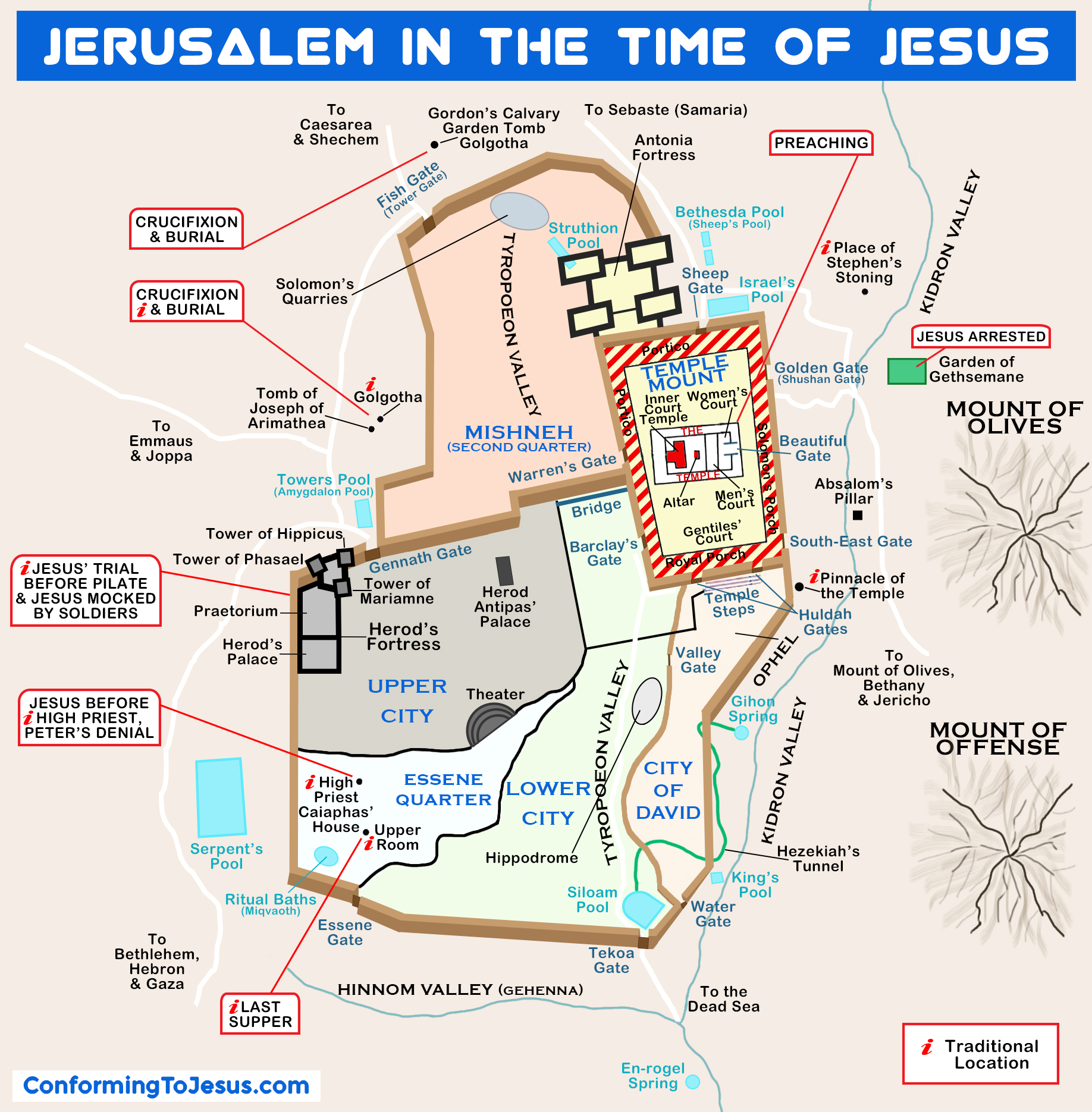
We do not know where the "Upper Room" was located other than it was in the city of Jerusalem. 


They purchased and prepared the Passover food. Have you ever celebrated Passover? It is a great object lesson. We often do it on Holy Week. Here are pictures of us celebrating with some of the members of the first cycle of the Bible Book Club. The book recommended below has everything you need to put together a Passover. Also, there are online resources. It is never too late to put together a Passover dinner!

You also might like to follow this audio prayer exercise based on the Last Supper: Taken, Blessed, Broken, Given Examen.

You can also download it in written form.

It comes from the God in All Things Website and is wonderful. 

Sunset-9 pm

210. Jesus washes the disciples' feet: John 13:1-20


Satan had entered the heart (13:27) of one of His "trusted twelve," but Jesus knew all that. With this, Jesus' time had finally come after repeatedly saying it had not yet come (John 2:4; 7:6, 8, 30; 12:23, 27: 17:1). Jesus came to serve and give His life as a ransom for many (Matthew 20:28; Mark 10:45). So He proves this by humbly doing the work of a lowly servant (1 Samuel 25:41; Luke 7:40-50; 1 Timothy 5:10) by washing their dusty feet. (Even Judas, the one who would betray Him got his feet washed - think about that!) 


Peter could not handle this role reversal. I love the way Kenneth Wuest translates Peter's statement, "You shall by no means wash my feet, no, never" (The New Testament: An Expanded Translation, p. 247). but Jesus essentially said, "'Unless I wash your sins away by my atoning death (cf. Rev. 1:5) you have no real relationship to Me' (cf. 1 John 1:7)" (The Bible Knowledge Commentary: Volume 2, p. 320). Peter did not totally get it yet, but Judas did not get it at all. He was an unsaved man (John 6:64-71). 


Leonardo da Vinci (1452-1519) - The Last Supper (1495-1498)
Leonardo da Vinci [Public domain], via Wikimedia Commons

211. Jesus and the disciple share the Last Supper: Matthew 26:20-30, Mark 14:17-26, Luke 22:14-30, John 13:21-30

Leonardo da Vinci's painting did not get it right. They were all reclining and not sitting at a table (Matthew 26:20), but it is still a beautiful work of art!

John's account is the only one that mentions that Jesus was "troubled in spirit" (the Greek word, etarachthē, means stirred or agitated) when he identified that someone would betray Him. John, as the disciple Jesus loved, was reclining at Jesus' bosom and would have been more able to sense Jesus' spirit at the time. Luke is the only one who records Jesus saying "woe" (judgment) on the man who does the betraying. How disconcerting to learn that one of their own would betray Jesus.


The Matthew, Mark, and John accounts record the betrayer as the one who dips together with Jesus in the bowl. John's account records Him doing this act and giving the morsel to Judas. It was a "final extension of grace to Judas. A host's giving a morsel of bread to a guest was a sign of friendship" (The Bible Knowledge Commentary, John 13:25-27), but Judas did not take it as that, and Satan entered him (John 13:27). John is the only gospel writer that records this and that the disciples still did not know Judas was the betrayer. 


How astounding that Luke would record a dispute about who was the greatest after Jesus had just said that someone would betray Him (Luke 22:24-30). Jesus told them this talk was "pagan thinking." The way UP to greatness was DOWN through service. In fact, it is "lowly service" in Greek! Eventually, they would sit on thrones judging the twelve tribes in His kingdom (Luke 22:30, Matthew 19:28). 


During the meal, Jesus instituted the Lord's Supper where the wine would represent the blood of the covenant and the unleavened bread, His body. The John account does not record Jesus' words regarding this. The Lord's Supper is to be done in remembrance of this (1 Corinthians 11:23-26). It is to be a memorial feast where believers are reminded that Jesus gave His body and blood for the redemption of the world! It is also celebrated to look forward to the day when He will come again. Lastly, it is a time when we can look within, examine our hearts, and repent of known sin (1 Corinthians 11:27-32).  Jesus was the Passover lamb, sacrificed for us, let us celebrate the feast (John 1:29, 1 Corinthians 5:7-8)!


Here is the general order of the last supper in 13 steps [some books show more steps, others fewer steps, so this is a general guideline]:
  1. The head of the company, Jesus in this case, opens with a prayer and
  2. Gives the 1st cup of wine for everyone in the company to drink.
  3. The head of the company washes his hands.
  4. The head of the company dips some of the bitter herbs into the salt water or vinegar and speaks a blessing, eats some of the herbs, and hands them to the others.
  5. The unleavened bread is broken into pieces, reserving half to be eaten after supper, called the after dish.
  6. The 2nd cup is filled and the youngest in the company (John) is instructed to ask questions about the significance of the Passover.
  7. Psalms 113 and 114 are sung.
  8. The 3rd cup of wine is filled, followed by prayer, and they all drink the cup.
  9. Everyone washes his hands.
  10. Supper begins with eating the unleavened bread and bitter herbs and the lamb. Everyone in the group must eat at least an olive size portion of the lamb. All the lamb is to be consumed or destroyed. no bones of the lamb are to be broken.
  11. Blessing after the meal and drinking of the 3rd cup of wine ("Redemption Cup") is filled, followed by prayer, and they all drink the cup. This is believed to be the point when Jesus told them to drink of it, as this was his blood. (Some believe it was the fourth cup.)
  12. The after-dish of the bread broken earlier is eaten. It is believed this is where Jesus said, "Take eat, this is my body."
  13. Drinking the fourth cup of wine. 
  14. Conclude with hymns and prayers. Psalms 115-118 and the Great Hallel - Psalm 136.
    212. Jesus predicts Peter's denial: Luke 22:31-38, John 13:31-38

    John records that Jesus said, "Now is the Son of Man glorified (The Amplified says, "Now He has achieved His glory, His honor, His exaltation!"), and God is glorified in Him; if God is glorified in Him, God will also glorify Him in Himself, and will glorify Him immediately."  As I mentioned in a previous post, "glorify" is a keyword in the Upper Room Discourse section of the book of John. Now that Jesus' time has come, it will come without delay. He was going away, and they were to love one another as He loved them (John 13:34, 35 should be memorized!). 


    Of course, Peter could not handle Jesus going away just as he could not handle Jesus washing His feet. Jesus knew that Peter would not, at first, lay down his life for Jesus, but Satan would be given permission to "sift him like wheat" (Luke 22:31). We see another example of this in the book of Job.  Jesus predicted perfecting in the sifting. Denial would lead to a strengthened man who would strengthen others, and Peter's epistles later on in life will reflect that. Stay tuned.


    The Upper Room Discourse 

    213. Jesus is the way to the Father: John 14:1-14

    The Sixth "I AM" Statement: I am the Way, the Truth, and the Life


    Jesus told His disciples to not be afraid and believe. The disciples still did not understand where Jesus was going and who He was. He told them He was going to prepare "rooms, abiding places" for them (not "manor houses" as some believe). They will be lovely places in His presence!

    Jesus also said He was "the way, the truth, and the life; no one comes to the Father but through Me" (14:6). He also said, "He who has seen me has seen the Father" (14:9). This whole section affirms Jesus' deity. There is one way, and that is through belief (a key word in John) in Jesus. 


    214. Jesus promises the Holy Spirit: John 14:15-31


    Love for Jesus is revealed by obedience to His commands (John 14:21, 23; 1 John 2:3; 3:22, 24; 5:3). John 14:21 is a core verse to memorize. 


    This is the first teaching on the Holy Spirit. He is our paraklētos:

    PARAKLĒTOS (παράκλητος , (3875)), literally, called to one’s side, that is, to one’s aid, is primarily a verbal adjective, and suggests the capability or adaptability for giving aid. It was used in a court of justice to denote a legal assistant, counsel for the defence, an advocate; then, generally, one who pleads another’s cause, an intercessor, advocate, as in 1 John 2:1, of the Lord Jesus. In the widest sense, it signifies a succourer, comforter. Christ was this to His disciples, by the implication of His word “another (allos, another of the same sort, not heteros, different) Comforter,” when speaking of the Holy Spirit, John 14:16. In 14:2615:2616:7 He calls Him “the Comforter.” “Comforter” or “Consoler” corresponds to the name “Menahem,” given by the Hebrews to the Messiah. (Vine, W., & Bruce, F. Vine's Expository Dictionary of Old and New Testament Words (2:208)

    Jesus would not be physically present, but the Spirit of the Truth would guide them. The Spirit would be in them. This was in contrast to the Old Testament where the Spirit came and went in believers for special purposes. When Pentecost came (John 14:20, Acts 2), all believers became indwelt by the Holy Spirit (Romans 8:9; 1 Corinthians 12:13). All believers have gifts of the Spirit too (Romans 12, 1 Corinthians 12, Ephesians 4, 1 Peter 4). This Helper will teach us all things. 

    Jesus said that "The Father is greater than I."  "The Father is greater in office or glory than the Son was in His humiliation" (The Bible Knowledge Commentary: New Testament). Jesus had already stated His deity earlier in John 14, and read in its entirety, John made this clear (1:1-2; 10:30 14:9; 20:28).  


    In addition to the promise of the Holy Spirit, Jesus assured them of peace that they could rest in. This was the Jewish way to say goodbye (šālôm). The Upper Room Discourse was His encouragement and last goodbye.

    REFLECTION/APPLICATION


    We have wonderful memories of celebrating Passover throughout the years. Celebrate the Feasts by Martha Zimmerman is a wealth of information about how to do this!

    2023 Update: We did it again this year with the same leader we did it with for the first cycle of the Bible Book Club back in 2008:


    PRAYER

    Jesus, thank You so much for being our Passover. We will celebrate with thanksgiving tonight for what You have so graciously done for us! 

    Wednesday, January 1, 2014

    250 Events in the Life of Christ

    The format below was found at a site that has now expired. I corrected the text and fixed the broken links. It is from the Life Application New Testament Commentary.

    Happy reading!


    I. Birth and Preparation of Jesus Christ


    Matthew
    Mark
    Luke
    John


    7. John the Baptist is born


    8. An angel appears to Joseph


    9. Jesus is born in Bethlehem


    10. Shepherds visit Jesus


    11. Mary and Joseph bring Jesus to the Temple


    12. Visitors arrive from eastern lands


    13. The escape to Egypt


    14. The return to Nazareth


    15. Jesus speaks with the religious teachers


    16. John the Baptist prepares the way for Jesus


    17. The baptism of Jesus


    18. Satan tempts Jesus in the wilderness


    19. John the Baptist declares his mission


    20. John the Baptist proclaims Jesus as the Messiah


    21. The first disciples follow Jesus


    22. Jesus turns water into wine


    II. Message and Ministry of Jesus Christ


    Matthew
    Mark
    Luke
    John

    23. Jesus clears the Temple


    24. Nicodemus visits Jesus at night


    25. John the Baptist tells more about Jesus


    26. Herod puts John in prison


    27. Jesus talks to a woman at the well


    28. Jesus tells about the spiritual harvest


    29. Many Samaritans believe in Jesus


    30. Jesus preaches in Galilee

    31. Jesus heals a government official’s son


    32. Jesus is rejected at Nazareth


    33. Four fishermen follow Jesus


    34. Jesus teaches with great authority


    35. Jesus heals Peter’s mother-in-law and many others


    36. Jesus preaches throughout Galilee


    37. Jesus provides a miraculous catch of fish


    38. Jesus heals a man with leprosy


    39. Jesus heals a paralyzed man


    40. Jesus eats with sinners at Matthew’s house


    41. Religious leaders ask Jesus about fasting


    42. Jesus heals a lame man by a pool


    43. Jesus claims to be the Son of God


    44. Jesus supports his claim


    45. The disciples pick wheat on the Sabbath


    46. Jesus heals a man’s hand on the Sabbath


    47. Large crowds follow Jesus


    48. Jesus chooses the twelve disciples


    49. Jesus gives the Beatitudes


    50. Jesus teaches about salt and light


    51. Jesus teaches about the law


    52. Jesus teaches about anger


    53. Jesus teaches about lust


    54. Jesus teaches about divorce


    55. Jesus teaches about vows


    56. Jesus teaches about revenge


    57. Jesus teaches about loving enemies


    58. Jesus teaches about giving to the needy


    59. Jesus teaches about prayer


    60. Jesus teaches about fasting


    61. Jesus teaches about money


    62. Jesus teaches about worry


    63. Jesus teaches about judging others


    64. Jesus teaches about asking, looking, knocking


    65. Jesus teaches about the way to heaven


    66. Jesus teaches about fruit in people’s lives


    67. Jesus teaches about building on a solid foundation


    68. A Roman officer demonstrates faith


    69. Jesus raises a widow’s son from the dead


    70. Jesus eases John’s doubt


    71. Jesus promises rest for the soul


    72. A sinful woman anoints Jesus’ feet


    73. Women accompany Jesus and the disciples


    74. Religious leaders accuse Jesus of getting his power from Satan


    75. Religious leaders ask Jesus for a miracle


    76. Jesus describes his true family


    77. Jesus tells the parable of the four soils


    78. Jesus explains the parable of the four soils


    79. Jesus tells the parable of the growing seed


    80. Jesus tells the parable of the weeds


    81. Jesus tells the parable of the mustard seed


    82. Jesus tells the parable of the yeast


    83. Jesus explains the parable of the weeds


    84. Jesus tells the parable of hidden treasure


    85. Jesus tells the parable of the pearl merchant


    86. Jesus tells the parable of the fishing net


    87. Jesus calms the storm


    88. Jesus sends demons into a herd of pigs


    89. Jesus heals a bleeding woman and restores a girl to life


    90. Jesus heals the blind and mute


    91. The people of Nazareth refuse to believe


    92. Jesus urges the disciples to pray for workers


    93. Jesus sends out the twelve disciples


    94. Jesus prepares the disciples for persecution


    95. Herod kills John the Baptist


    96. Jesus feeds 5,000

    97. Jesus walks on water


    98. Jesus heals all who touch him


    99. Jesus is the true bread from heaven


    100. The people disagree that Jesus is from heaven


    101. Many disciples desert Jesus


    102. Jesus teaches about inner purity


    103. Jesus sends a demon out of a girl


    104. Jesus heals many people


    105. Jesus feeds 4,000


    106. Leaders demand a miraculous sign


    107. Jesus warns against wrong teaching


    108. Jesus restores sight to a blind man


    109. Peter says Jesus is the Messiah


    110. Jesus predicts his death the first time


    111. Jesus is transfigured on the mountain


    112. Jesus heals a demon-possessed boy


    113. Jesus predicts his death the second time


    114. Peter finds the coin in the fish’s mouth


    115. The disciples argue about who would be the greatest


    116. The disciples forbid another to use Jesus’ name


    117. Jesus warns against temptation


    118. Jesus warns against looking down on others


    119. Jesus teaches how to treat a believer who sins


    120. Jesus tells the parable of the unforgiving debtor


    121. Jesus’ brothers ridicule him


    122. Jesus teaches about the cost of following him


    123. Jesus teaches openly at the Temple


    124. Religious leaders attempt to arrest Jesus


    125. Jesus forgives an adulterous woman


    126. Jesus is the light of the world


    127. Jesus warns of coming judgment


    128. Jesus speaks about God’s true children


    129. Jesus states he is eternal


    130. Jesus sends out 72 messengers


    131. The 72 messengers return


    132. Jesus tells the parable of the Good Samaritan


    133. Jesus visits Mary and Martha


    134. Jesus teaches his disciples about prayer


    135. Jesus answers hostile accusations


    136. Jesus warns against unbelief


    137. Jesus teaches about the light within


    138. Jesus criticizes the religious leaders


    139. Jesus speaks against hypocrisy


    140. Jesus tells the parable of the rich fool


    141. Jesus warns about worry


    142. Jesus warns about preparing for his coming


    143. Jesus warns about coming division


    144. Jesus warns about the future crisis


    145. Jesus calls the people to repent


    146. Jesus heals the crippled woman


    147. Jesus teaches about the Kingdom of God


    148. Jesus heals the man who was born blind


    149. Religious leaders question the blind man


    150. Jesus teaches about spiritual blindness


    151. Jesus is the good shepherd


    152. Religious leaders surround Jesus at the Temple


    153. Jesus teaches about entering the Kingdom


    154. Jesus grieves over Jerusalem


    155. Jesus heals a man with swollen limbs


    156. Jesus teaches about seeking honor


    157. Jesus tells the parable of the great festival


    158. Jesus teaches about the cost of being a disciple


    159. Jesus tells the parable of the lost sheep


    160. Jesus tells the parable of the lost coin


    161. Jesus tells the parable of the lost son


    162. Jesus tells the parable of the shrewd manager


    163. Jesus tells about the rich man and the beggar


    164. Jesus tells about forgiveness and faith


    165. Lazarus becomes ill and dies


    166. Jesus comforts Mary and Martha


    167. Jesus raises Lazarus from the dead


    168. Religious leaders plot to kill Jesus


    169. Jesus heals ten men with leprosy


    170. Jesus teaches about the coming of the Kingdom of God


    171. Jesus tells the parable of the persistent widow


    172. Jesus tells the parable of two men who prayed


    173. Jesus teaches about marriage and divorce


    174. Jesus blesses the children


    175. Jesus speaks to the rich young man


    176. Jesus tells the parable of the vineyard workers


    177. Jesus predicts his death the third time


    178. Jesus teaches about serving others


    179. Jesus heals a blind beggar


    180. Jesus brings salvation to Zacchaeus’s home


    181. Jesus tells the parable of the king’s ten servants


    182. A woman anoints Jesus with perfume


    183. Jesus rides into Jerusalem on a young donkey

    184. Jesus clears the Temple again


    185. Jesus explains why he must die


    186. Most of the people do not believe in Jesus


    187. Jesus summarizes his message


    188. Jesus says the disciples can pray for anything


    189. Religious leaders challenge Jesus’ authority


    190. Jesus tells the parable of the two sons


    191. Jesus tells the parable of the evil farmers


    192. Jesus tells the parable of the wedding dinner


    193. Religious leaders question Jesus about paying taxes


    194. Religious leaders question Jesus about the Resurrection


    195. Religious leaders question Jesus about the greatest commandment


    196. Religious leaders cannot answer Jesus’ question


    197. Jesus warns against the religious leaders


    198. Jesus condemns the religious leaders


    199. Jesus grieves over Jerusalem again


    200. A poor widow gives all she has


    201. Jesus tells about the future


    202. Jesus tells about his return


    203. Jesus tells about remaining watchful


    204. Jesus tells the parable of the ten bridesmaids


    205. Jesus tells the parable of the loaned money


    206. Jesus tells about the final judgment


    III. Death and Resurrection of Jesus Christ


    Matthew
    Mark
    Luke
    John

    207. Religious leaders plot to kill Jesus


    208. Judas agrees to betray Jesus


    209. Disciples prepare for the Passover


    210. Jesus washes the disciples’ feet


    211. Jesus and the disciples share the Last Supper

    212. Jesus predicts Peter’s denial


    213. Jesus is the way to the Father


    214. Jesus promises the Holy Spirit


    215. Jesus teaches about the vine and the branches


    216. Jesus warns about the world’s hatred


    217. Jesus teaches about the Holy Spirit


    218. Jesus teaches about using his name in prayer


    219. Jesus prays for himself


    220. Jesus prays for his disciples


    221. Jesus prays for future believers


    222. Jesus again predicts Peter’s denial


    223. Jesus agonizes in the garden


    224. Jesus is betrayed and arrested

    225. Annas questions Jesus


    226. Caiaphas questions Jesus


    227. Peter denies knowing Jesus

    228. The council of religious leaders condemns Jesus


    229. Judas hangs himself


    230. Jesus’ trial before Pilate

    231. Jesus stands trial before Herod


    232. Pilate hands Jesus over to be crucified

    233. Roman soldiers mock Jesus


    234. Jesus is led away to be crucified

    235. Jesus is placed on the cross

    236. Jesus dies on the cross

    237. Jesus is laid in the tomb

    238. Guards are posted at the tomb


    239. Jesus rises from the dead

    240. Jesus appears to Mary Magdalene


    241. Jesus appears to the women


    242. Religious leaders bribe the guards


    243. Jesus appears to two believers traveling on the road


    244. Jesus appears to his disciples